
Plantar fasciitis, a common foot condition characterized by heel pain, can significantly impact daily life. While traditional treatments like rest, ice, and over-the-counter medications often provide relief, some individuals may require more advanced interventions. In recent years, a minimally invasive procedure known as plantar fasciitis embolization has emerged as a promising solution.
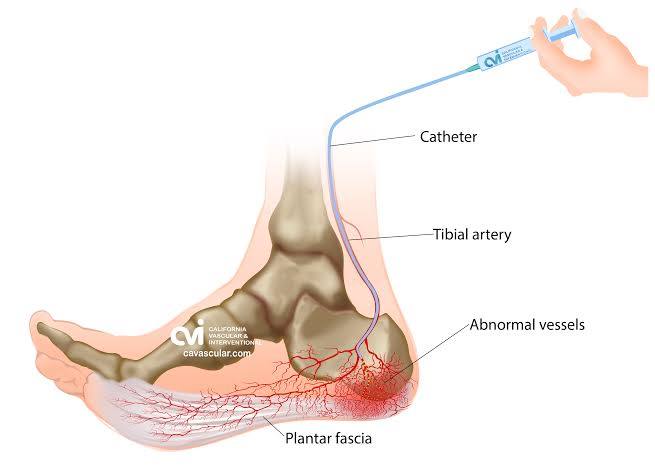
Plantar Fasciitis Embolization (PFE) is a minimally invasive procedure that blocks abnormal blood vessels feeding the inflamed plantar fascia, reducing blood flow, inflammation, and chronic heel pain, especially for those unresponsive to conservative treatments like physical therapy or injections. Performed by vascular specialists using imaging guidance, it involves inserting a catheter, releasing tiny particles to occlude problematic vessels, and offers benefits like no large incisions, quick recovery, and lasting relief for many, though mild soreness can occur post-procedure.
How it Works
Targeted Approach: A catheter is guided to the small arteries supplying the inflamed plantar fascia.
Vessel Occlusion: Tiny particles (embolic agents) are released to block these specific vessels, normalizing blood flow.
Healing: Reduced blood flow helps decrease inflammation, allowing the tissue to heal and pain to subside.
Who is a Candidate?
Patients with chronic plantar fasciitis (heel pain) lasting over a year.
Those who haven’t found relief from standard treatments (PT, orthotics, medications).
Benefits
Minimally Invasive: No large incisions, performed as an outpatient procedure.
Quick Recovery: Faster return to activity with minimal downtime.
Effective: Significant pain reduction and long-lasting relief reported by many.
Risks & Side Effects
Generally safe, but risks include rare infection or unintended vessel blockage (non-target embolization).
Temporary pain, bruising, or swelling at the site can occur but usually resolves quickly.
What to Expect
The procedure typically takes less than an hour.
Relief can be felt within days to weeks, with full improvement taking a few months.